You have the topic. I have the exercise that makes it visible in the room.
Most talks are finished before anyone books them. With me it is the other way round. We look for the hook together beforehand: in Hesse it was the new majorities after the elections, in a pharmaceutical group the globally distributed teams, at a regional development agency the shortage of skilled workers.
Underneath, the finding is the same every time. The same thing is read differently by the people involved, and nobody notices. I call that state Decision Fog, and it is what I make visible in the room.
That needs no slides, at least not at the start. The audience experiences the finding on itself within a few minutes. After that we talk about what it has just been through, not about a model.
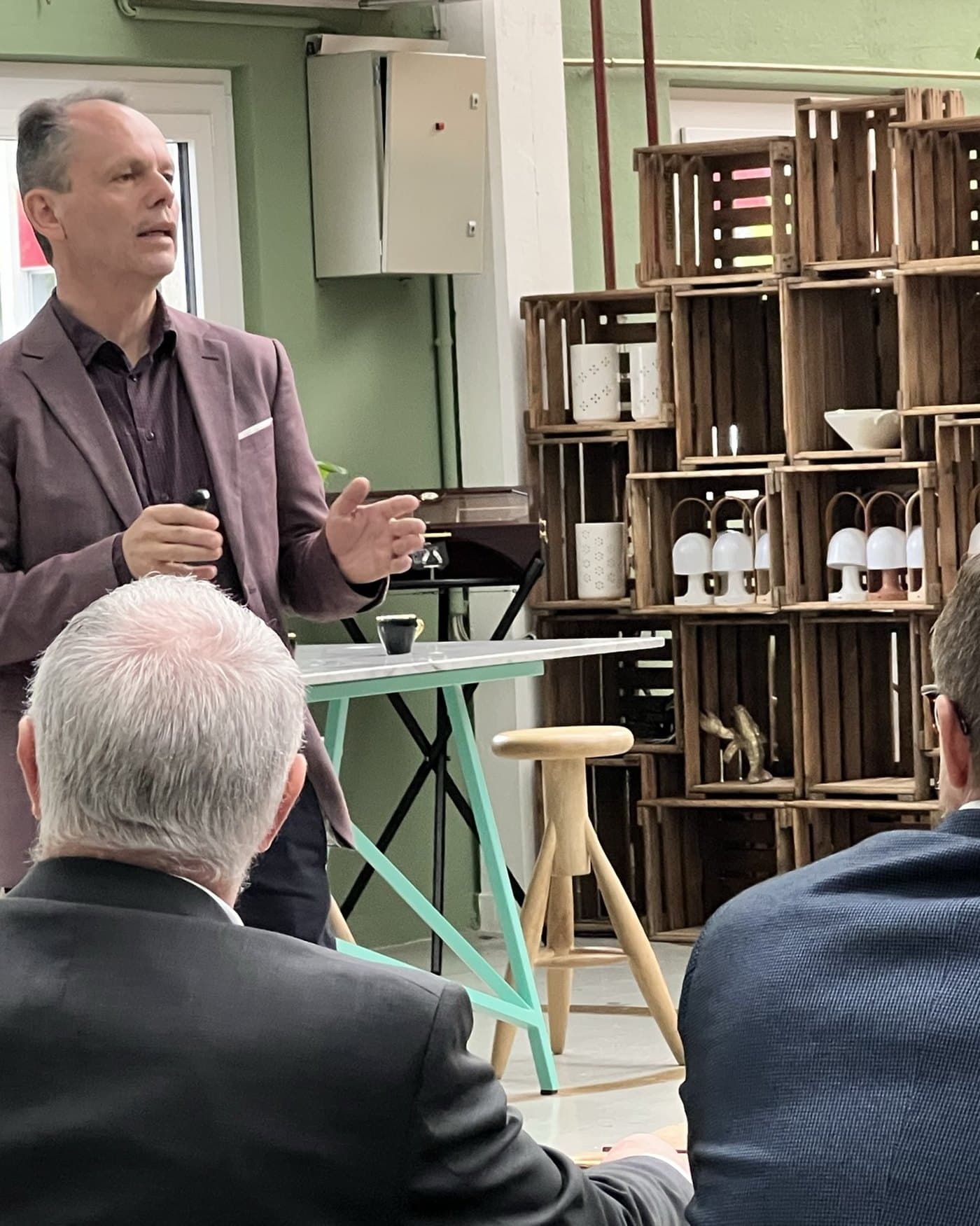
The kinds of events I build the session for
Associations and development agencies
Internal leadership events
Customer events
Conferences and professional meetings
What happens in the room
At a global event of an in-house agile community in a pharmaceutical group, we did not start with slides but with a pencil. The event was virtual. Two short exercises with simple number sequences, and within a minute the room was split. Not by role, not by experience, but by perception.
I thought the others were cleverer than me. In fact they had only seen a different angle.
A participant said that in the debrief, and it stayed with everyone. From then on we talk about what has just happened in the room: that we think in patterns, that we look for people who confirm our patterns, and that we overlook whoever sees differently.
There is a reason it happens so fast. The brain completes patterns before we can check them, and then looks mainly for confirmation. The number sequences make that tangible: every rule that emerges in the room is coherent in itself, and every one explains the same numbers differently. Where this mechanism comes from, and what it sets off in leadership teams, is in my book «Klarheit entsteht im Handeln», which appears in German in spring 2027 with Schäffer-Poeschel.
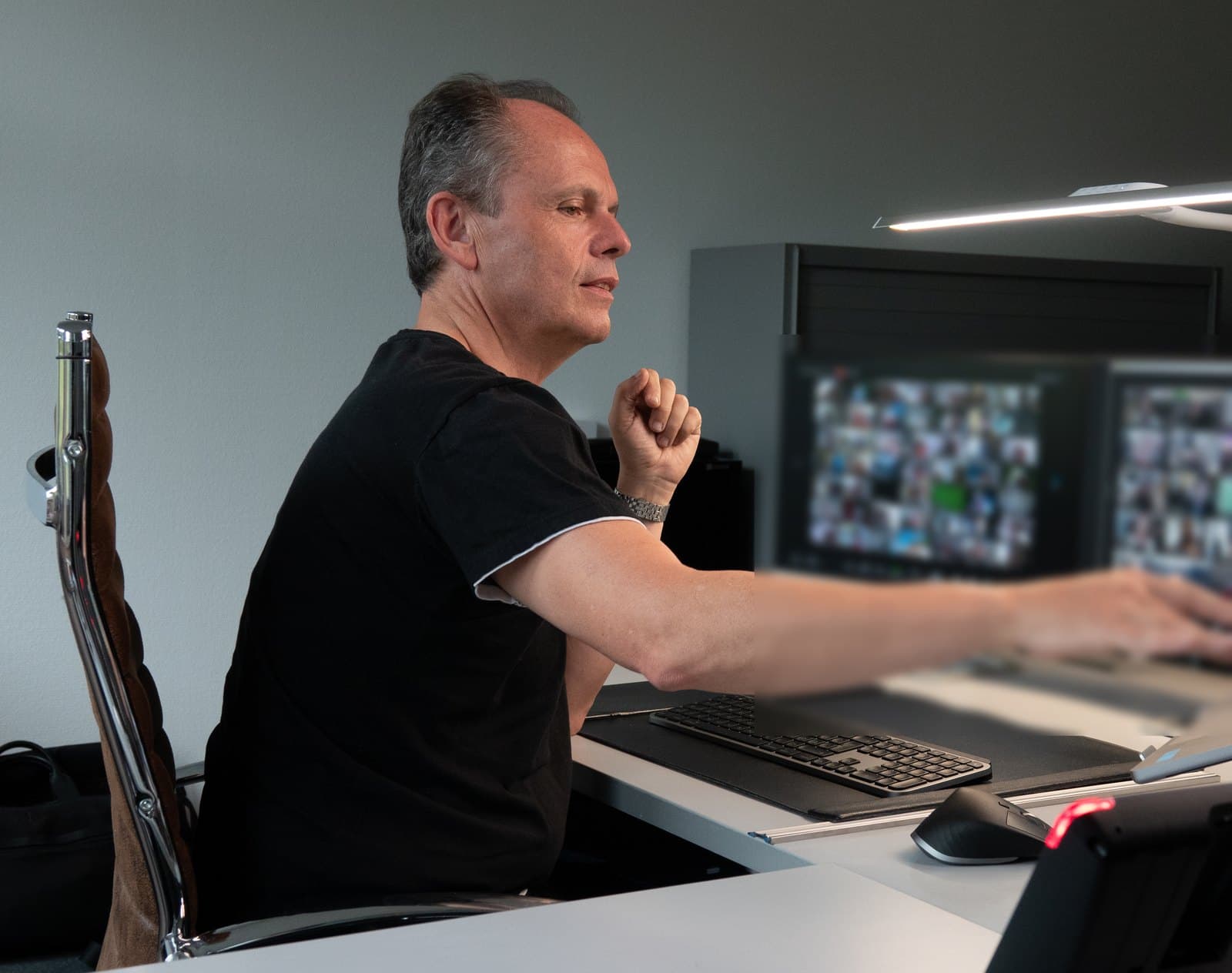
The same thing in a hall, in front of fifty people
The innovation and start-up centre in Zofingen, the regional development agency, had invited people to a talk and panel on the shortage of skilled workers. About fifty came to the Palass in the old town. Instead of lecturing, I asked what they thought the cause was, and tallied the answers on the wall.
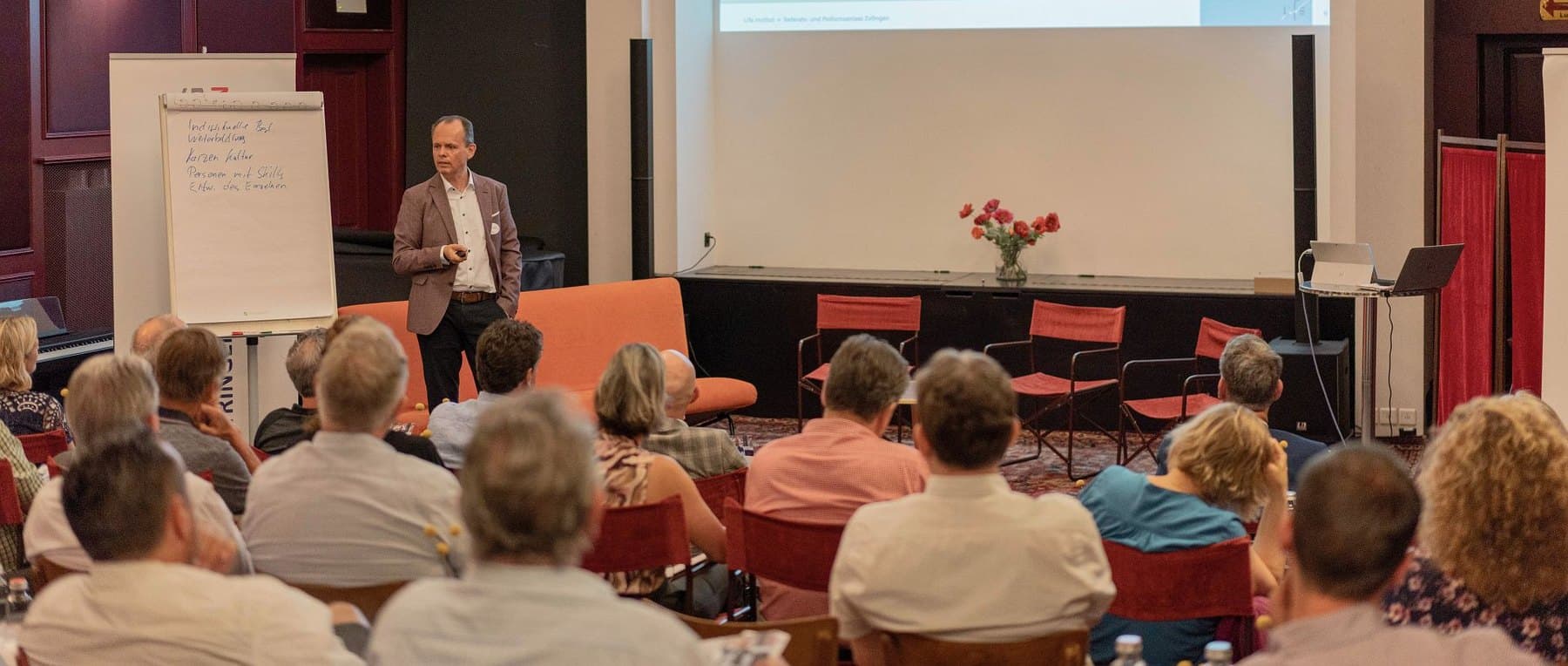
Within a few minutes the result was there. Trends and best practices seven marks, external conditions five, organisation nine, lived culture nineteen. The hall had told itself where it locates the problem.
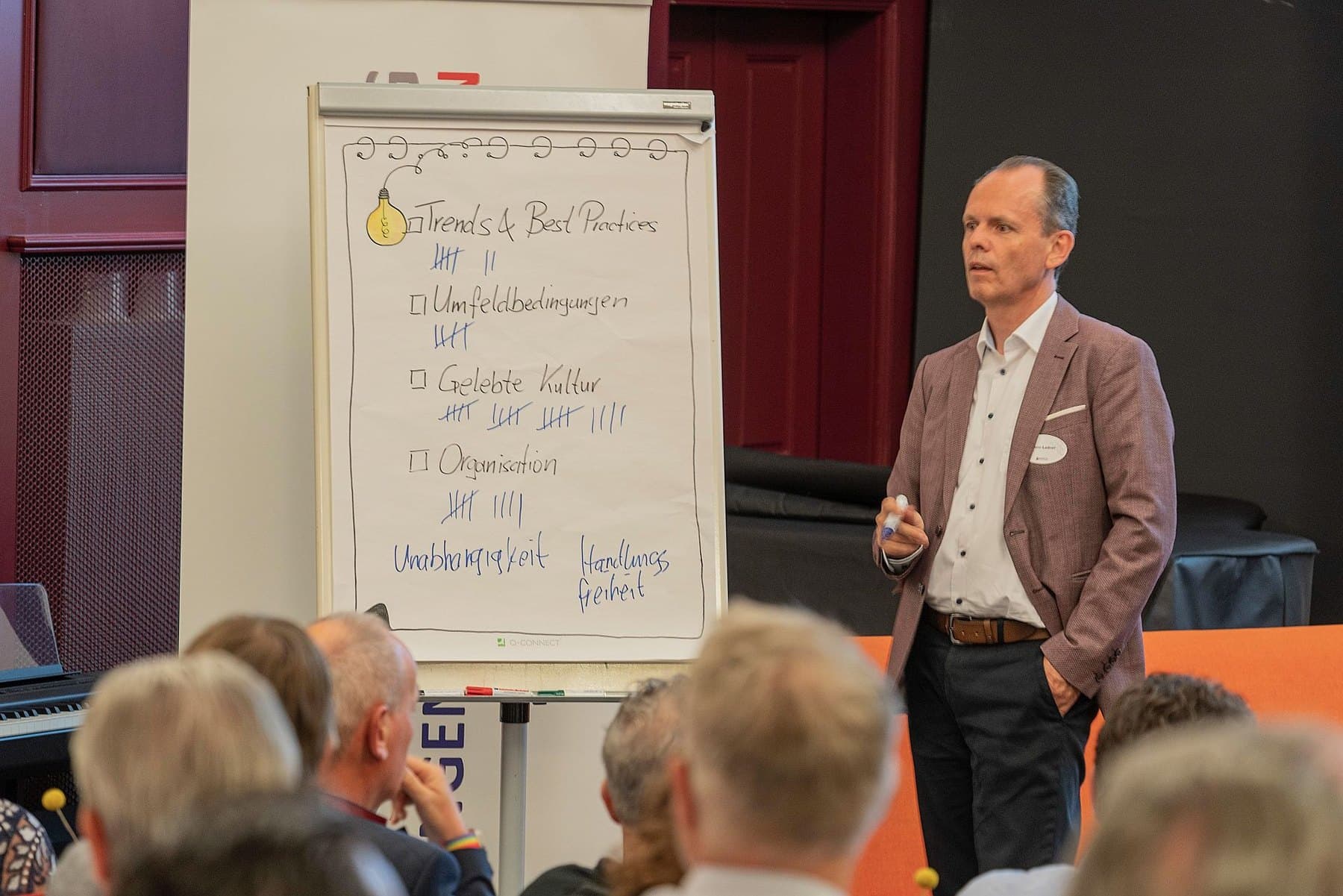
How an event comes about
It starts with a conversation with the people responsible, not with a list of topics. In it we look for the question that is open on your side right now, and check whether Decision Fog sits underneath it. The hook and the invitation come out of that.
That the detour is worth it showed in Hesse. The Hessian Association of Towns and Municipalities had expected fewer registrations for the first run. Forty mayors came, more than ever before according to the association, and it puts that down to the invitation: to the fact that it named their situation and not a topic.
What I bring stays the same: the three transitions where clarity is lost, the exercises that make this visible in the room, and two or three tools the participants can carry on with the next day.
You have the event. We will find the hook and the exercise for it in thirty minutes.
You tell me what kind of event it is, who will be in the room and what is unresolved there. Both come out of that. Afterwards you will know whether it fits. No charge.