You can see that more would be possible. It was decided. It never landed.
There is no shortage of ideas, and none of effort. Decisions are made, communicated and adjusted, and still you do not find a common direction. Most often because the actual decision was never really made, even though everyone believes it was.
Each person builds their own picture of the situation, and within their world it fits. Only where everything has to come together does it start to grate. I call that state Decision Fog. It begins where alignment on purpose begins, clouds the view of priorities, and ends in accountability for the intended impact that nobody carries any more.
That is where I work with you, and not with more analysis and more control but with the opposite: making the different pictures visible and bringing them together where they diverge. What I bring is close to thirty years with leadership teams in situations like this, across industries. For two decades I have documented these mandates systematically, which is why I know the patterns that repeat in them.
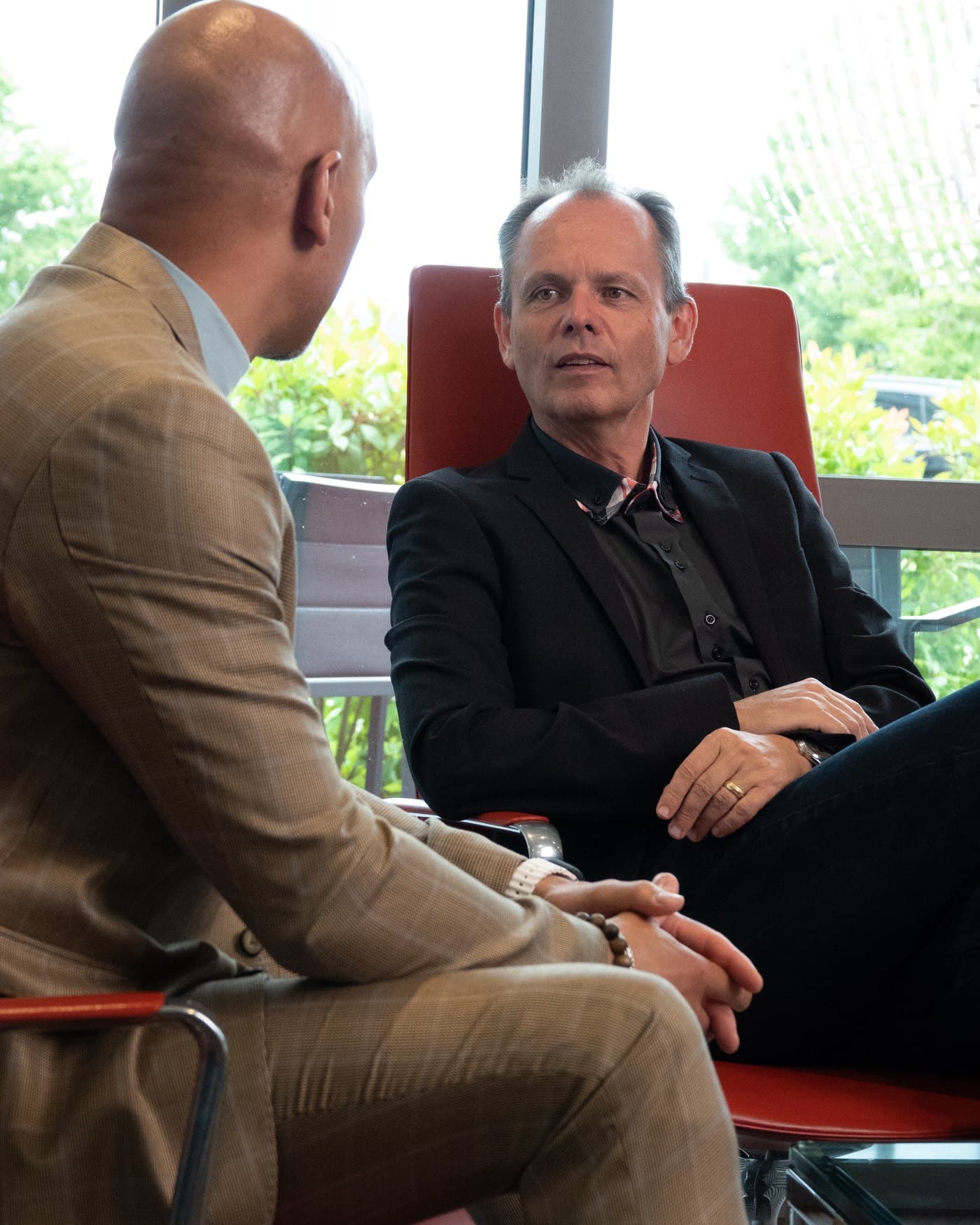
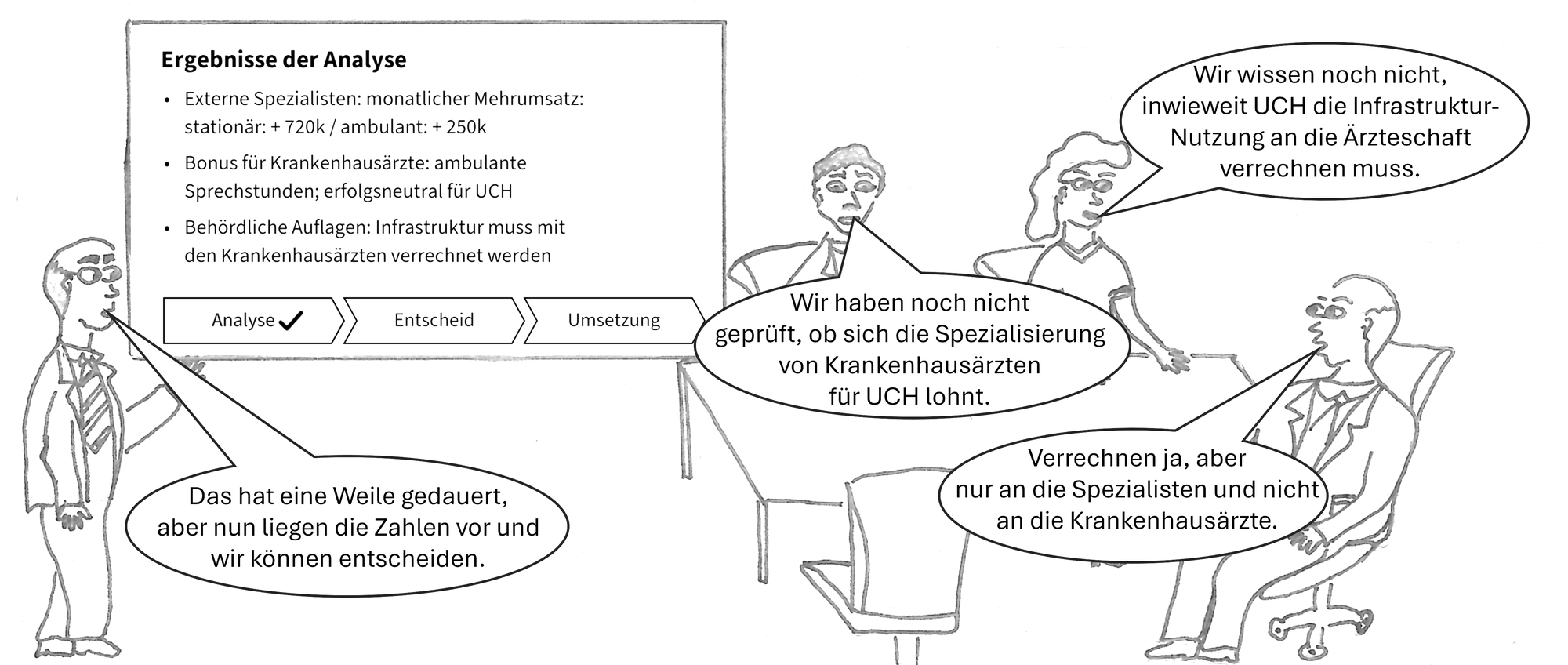
Situations I get called into
When much is decided and little comes of it.
When many things run at once and nothing moves.
When everyone decides the same and each does something else.
When a meeting is needed to clear up the last meeting.
If any of this describes your situation, a conversation is worth having.
Thirty minutes. You describe what is going on in your team at the moment, and we look at what sits underneath it. No charge. I am glad to have these conversations even when nothing comes of them.
What I mean by sparring
I am the counterpart for the decisions you are making anyway: before the meeting, after the meeting, and in the weeks in between, where it shows what became of it.
We think through together how your next decision will land, which pictures will form around it, and what you can do before they harden. The longer we work together, the more I see for myself instead of only hearing it from you.
My interest is the same as yours, and the mandate holds it in place: commissioned by the company, openly justified, cancellable monthly. What it is measured against is impact. I want neither to run your programme nor to take anyone in the house out of a job.
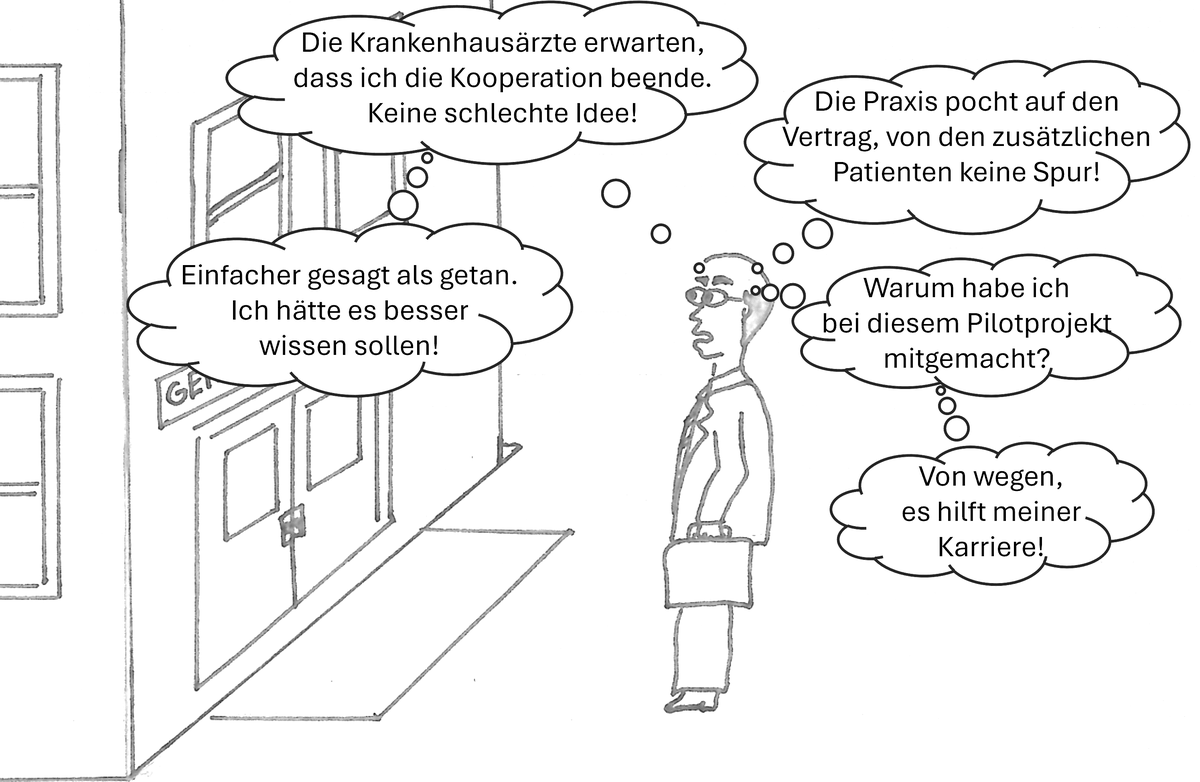
What you get out of it
You learn early where something is shifting. Which coalitions are forming, who is turning away from what, where agreement has quietly become waiting. I watch for it while it still looks incidental.
You have someone who contradicts you with nothing to gain from it. The higher someone sits, the more filtered what reaches them becomes. With me you do not have to place anything before you say it.
And you are not alone with it. Sometimes my finding is that nothing is needed, or that you can solve it yourselves. A radar that shows a mandate every time would not be one.
How it runs
Three stages, graded by access and leverage. Each brings a different kind of influence.
Every stage begins with you opening more to me.
First trust, then access, then legitimacy. Each grows out of what came before, which is why the third does not stand at the beginning.
Thinking with you
You get a counterpart who commits to a view.
Regular conversations, agreed in advance, and availability in between. The real value often lies in the call ten minutes before a meeting, not in the scheduled slot.
I do not just reflect, I disagree. After every conversation you get a note: what struck me, where I see a risk, what I would do next.
The only precondition is that you trust me. That is why every collaboration starts here, with a conversation between the two of us. Book a first conversation
Limit: what I see rests on what you tell me and on patterns from other organisations. That carries for a while, not indefinitely.
Seeing with you
You get a finding instead of an opinion.
To that is added a look of my own into your organisation. Access to what exists anyway: minutes, mission statements, running surveys. Short structured conversations with a few key people. One brief, recurring question to a group, to see whether the new is being taken up or stalling. Silent presence in selected real meetings.
With that I no longer see your situation only through your account of it, and the outside view stays sharp over months.
The precondition is access. That is the real price of this stage, and the reason it does not come first.
Acting with you
You get impact at the moment it arises.
In every change there are a few moments that cannot be repeated. When what was formulated becomes binding. When the next level has to put it in their own words. The first real conflict over the new how. The first case in which it shows whether the new has consequences.
In those moments I am there: prepared, present, intervening in the moment rather than recommending afterwards.
The precondition is legitimacy with your people. It grows out of what came before.
What it is not
Not coaching. The subject is the path, not you.
Not a competing programme. Where someone is already working, I help bring their plan to life rather than replace it.
Not an audit. The subject is your decisions, not other people's work.
Who it is not for
Not for someone who expects a ready-made solution or a list of proven practices. And not for someone unwilling to negotiate their own reading of the situation. You are not the subject, but your reading of the situation has to be open to question, otherwise we work on a picture instead of on reality.
The arrangement
A mandate over several months, not an hourly fee. What you get is availability and judgement. Cancellable monthly, with an agreed point at which we look together at whether it is working.
It needs no consensus in the house. One person can set it off, and nobody loses anything by it. It is commissioned by the company, not privately. It benefits the company, and it should be openly justified.
When it is about the whole leadership group
Sometimes the matter does not sit with one person but with the leadership group. Then I work with the team, along a method that runs in four stages: making visible how differently the situation is seen, reaching an understanding about it, agreeing how you will work with each other from here, and learning from what settles in. The path is described at the Life Institute. The path in four stages